Preface


My grandparents, Jacob & Lena (Zimmerman) Willems, were step-brother and step-sister in a marriage my family says was arranged by the Mennonite Brethren Church. Grandma's father, Heinrich H. Zimmermann (1866-1934), was a widower with 5 children, whose wife, Maria Dyck Zimmermann (1861-1905), died soon after the family arrived in Canada (1903) from a Mennonite colony in what is now Ukraine. Grandpa's mother, Elisabeth Bolt Willems (1858-1943), was a widow with 9 children whose husband, Cornelius Willems (1885-1902), died two years after the family arrived in Saskatchewan in 1900 from Mountain Lake, Minnesota, the place where the family settled after emigrating from a Mennonite settlement in Crimea in 1875. Jacob & Lena were married in 1909. They moved to Reedley, California in 1919.

There is an even earlier couple important to this history, Gerhard Willems (1820-1900) and Katharina Rempel Willems (1823-1875), Cornelius' parents. Their story reaches back to the early years of Mennonite sesttlement in the land they knew as South Russia, a story of migration from the North Sea to the Black Sea, from Eastern Europe to North America.

COMMENTS are very welcome. You may reach me by clicking on the "view my complete profile".

Friday, February 15, 2013

Mountain Lake, Minnesota 1875-1900


Obituary
“Our father, Jacob C. Willems, went to be with the Lord on Sunday, November 8, 1964, in the Dinuba Convalescent Home, at 1:35 p.m.  He was the son of Cornelius and Elizabeth, nee Boldt, Willems and was born on August 8, 1883, in Mountain Lake, Minnesota.  He reached the age of 81 years and 3 months.
       “In the year1900, he moved with his parents from Mountain Lake, to Canada, and settled west of Waldheim, Saskatchewan in the Brotherfield area.  His father died in 1902, only two years after they had been in this new country."                                                                                                                                                                                    

            My grandfather, Jacob C. Willems, was born in Mountain Lake, Minnesota.  That is one of the facts I learned as a child, but it was simply that, a fact.  I never thought about it, never felt any connection to it.  Mountain Lake was just a place where the Willems family happened to stop before moving on to their real destination—Canada, the place where my grandparents met and married, the place where my father was born.

            Then, one day as I checked to see what the library at the University of Missouri in Columbia might have on Mennonite history, I happened upon a book titled, A History of the Settlement of German Mennonites from Russia at Mountain Lake, Minnesota.  It was a small book published in 1938 by the author, Ferdinand P. Schultz, a teaching assistant in history at the University of Minnesota.   Surprised and delighted that such a book existed, and that the MU library, only five minutes from my house, would actually have a copy, I checked it out and took it home.    

As I read Schultz’ book, Mountain Lake became real.  It was as if a window had suddenly opened onto a period of time in my family’s life that previously had been blank, a period of time that encompassed a whole generation.  My family lived in Mountain Lake twenty-five years.  Grandpa’s father, Cornelius, lived there almost all his adult life.  Twenty years old in 1875 when his family arrived in Mountain Lake, Cornelius was forty-five years old in 1900 when he moved his family to Canada.  It was in Mountain Lake that Cornelius married Elisabeth Boldt, my grandfather Willems’ mother.  All but the youngest of Elisabeth and Cornelius’ nine children were born before they moved to Canada.  My Grandpa, Jacob, who turned seventeen the summer of 1900, also spent a significant part of his life in Minnesota—all his childhood and most of his adolescence.  That Grandpa was born in Mountain Lake, Minnesota, was now more than just an isolated fact.

(To read the complete essay click on “Mountain Lake, 1875-1900” in the “Pages” column on the right.)

Friday, February 8, 2013

Clarence Hiebert's Scrapbook


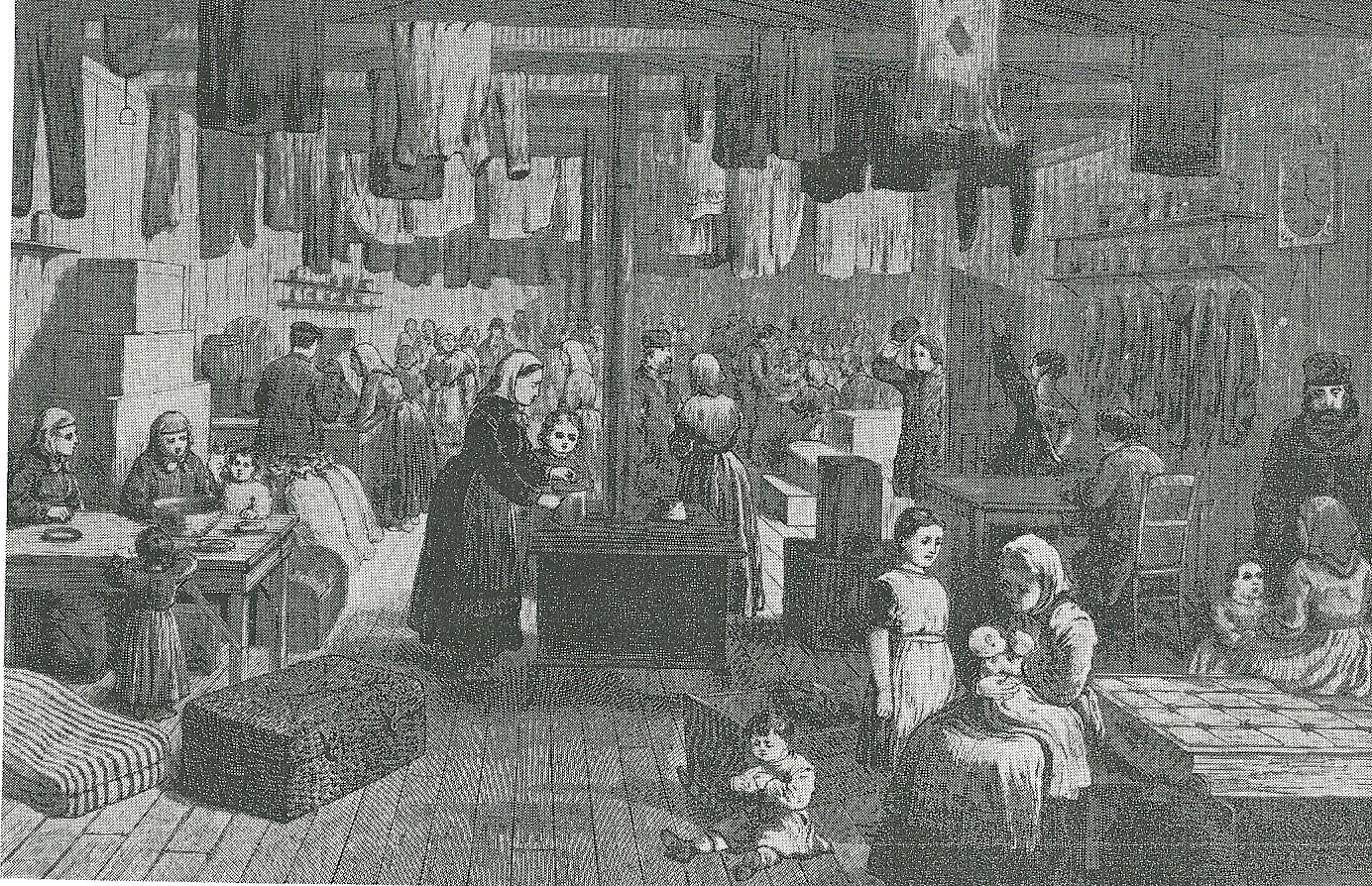
The sketches below are from an article, “The Disciples of Menno Simonis (sic), Their Settlement in Central Kansas,” published in Frank Leslie’s Illustrated Newspaper (New York), March 20, 1875.    My grandfather Willems’ family arrived in Mountain Lake, Minnesota, the summer of 1875, and I imagine they looked much like the people in these sketches.  Although these sketches were made in Central Kansas, the conditions my family faced would have been much the same.  That area of Minnesota is prairie, and Mountain Lake had a Settlement House for the large group of Mennonites who descended on it beginning in 1873.

I came across the article and its illustrations one day while browsing the shelves of the library at the Columbia campus of the University of Missouri, which has a surprisingly large collection of books about and by Mennonites.  Titled Brothers in Deed to Brothers in Need: A Scrapbook about Mennonite Immigrants from Russia 1870-1885[1], the book was compiled, edited & published by Clarence Hiebert, Professor of Religious Studies at Tabor College, a Mennonite Brethren school located  in Hillsboro, Kansas.

This thick, large format book is a compilation of photocopied newspaper articles, government documents, ship lists, old photos, sketches and advertisements pertaining to the emigration of Mennonites from Russia to North America between the years 1870, when the Mennonites in South Russia began to seriously considering leaving Russia, to1885, when the largest wave of migration subsided.  The arrival of thousands of these strange foreigners—about 15,000 to the prairie states in the United States and about 8,000 to Manitoba in Canada—evoked a flurry of curiosity.  Newspapers and magazines sent reporters who researched the history of these people, their beliefs, values and reputation.  They wrote long articles informing their readers abound the Mennonites reasons for migrating, describing what they looked like , what they offered to the communities where they settled, what their new neighbors might expect from them:

The emigrants are a conscientious, hard-working agricultural people, and most of them are the possessors of a moderate capital.  A very large amount of money has thus come into this country, as it is estimated that the head of each family brought from $2,000 to $10,000.  They will be welcomed by any State within whose limits they settle.”
--*--
Those words are from the article which accompanied the sketches above.  An even earlier example comes from a long, very thorough article printed in The Chicago Times, August 26, 1873, when the very first Mennonite emigrants began to arrive:

THE MENNONITES
(Special Correspondence)

“ELKHART, Ind. Aug. 23.—The 19 families of Mennonites that recently reached this country from Russia, and who have been heralded throughout the country as the advance of a very large immigration, arrived at this place on Wednesday of the week and are furnished with temporary quarters until they decide upon a permanent location.  The party consists of exactly 90 persons, old and young, all healthy and hardy-looking specimens, with the blonde complexion so common to the people of their native country prevailing among them. . . .

“The Mennonites are good agriculturalists, but are particularly noted for their plantations of fruit, forest, and mulberry trees.  This culture they have followed with great success on steppes that were formerly perfectly bare.  The intended emigrants are, according to the best accounts, intelligent, industrious, and persevering.  In addition, they are very clean, moral, temperate and economical.  They are excessively religious.  Petzoulet (?) in his travels in 1835, says that it is his “firm conviction that Russia, cannot show any more diligent or more useful citizens.”  There are schools in every village, attendance at which is made compulsory.  Education is universally among them. . . .

“…they also bring a large amount of ready money.  They are most acceptable as future citizens.”
--*--

Not all reports were this positive, and not all their new neighbors welcomed them.  However,  their agricultural ability was generally praised, and the gold they brought with them was never turned down. 


[1] Newton, KS: Faith & Life Press, 1974.

"Frank Leslie's Illustrated Newspaper (New York), March 20, 1875

"The Russian Mennonites--Types of Faces and Costumes"

Settlement House Central Kansas 1875
Central Kansas 1875

Friday, February 1, 2013

Gerhard & Katharina:


Gerhard Willems (1820-1900) & Katharina Rempel Willems (1823-1875)

An Invitation to a Willems Reunion 1980[1]
 “Dear Relatives,
       Our great-grandfather, Gerhard Willems, was born in Holland (or Prussia) on Oct. 3, 1820.  He was married to Katharina Rempel in 1841.  They spent some years farming in Russia.  Great-grandmother died in Russia in 1875 at the age of 52.” 

Willems Gen.  I. II. III.

“Gerhard and his family moved to Minnesota in 1875; however, his wife Katarina died just shortly before they left for America.  Gerhard moved from Minnesota to Canada.  After he died he was put into a grave and it was covered with boards.  In the Spring when some of the sons came from Minnesota his body was viewed and then buried.”
                                                                                                     
            Gerhard Willems (1820) and Katharina Rempel Willems (1823-1875) are my paternal great-great-grandparents.  They were completely unknown to me till my mother sent me a mimeographed invitation to a 1980 Willems Family Reunion to be held at Bethany Bible Institute in Hepburn, Saskatchewan.  The people invited were the descendants of Gerhard and Katharina, and the invitation listed twelve children born to Katharina and Gerhard with birth and death dates for most of them.  It noted that some of the information might need correcting and invited people to bring pictures and other information they might have about the family.

              I was not able to attend the reunion and learned nothing further about Gerhard and Katharina and their children until a 1994 visit to my Aunt Mary (Willems) Davis in Dinuba, California.  I had just finished my doctoral dissertation and was finally turning in earnest to writing about the story of my Willems grandparents and their family. I told Mary about my project, and we talked about her parents and what she knew about their families.  She said she had something I might want, then searched in her papers and took out a mimeographed sheet of data that was given to her by one of her cousins.  This document, Willems Gen. I. II. III,  gives the same names and dates as those on the 1980 Willems Reunion Invitation but with some additional dates and information about locations of births and deaths.  It was probably put together and distributed after the pooling of information at the Reunion.

            Two years later, in the winter of 1996, I was able to return to Dinuba, this time for six weeks, two of which I spent with my cousin Joanne who lived in Fresno.  I slept on her couch and each weekday morning drove with her to the high school where she was teaching.  She got out of the car, and I continued on to the Center for Mennonite Brethren Studies at Fresno Pacific University (my family was MB).  The rest of the day was spent immersed in the Center’s resources.  Kevin Enns-Rempel, the archivist, introduced me to the archives and other primary and secondary sources.  He also entered the information on Willems Gen. I. II. III into a computer data base, the Genealogical Registry and Database of Mennonite Ancestry, referred to as “GRANDMA.”  That information brought up an ancestry chart that gave exact dates for Gerhard’s birth and marriage to Katharina Rempel as well as information for Katharina’s parents.

            GRANDMA was just getting started when that first genealogical chart was printed.  In the years that followed, much more data was gathered and entered.  In April 2006, I was able to attend a genealogical workshop at Tabor College in Hillsboro, Kansas, which also has a Center for Mennonite Brethren Studies.  The workshop was conducted by Tim Janzen, a physician who is also deeply involved in the GRANDMA project.  After the main program, Tim met with us individually.  When I gave him my Willems-Rempel material, he said that he was corresponding with a relative of mine, Gerhard Willems (b. 1955), a great- grandson of the Gerhard (1844-1916)[2] who stayed in the Crimea when the rest of the family emigrated to North America.  This living Gerhard Willems was born in Kazakhstan but moved with his family to Germany in 1988, just after the fall of the Iron Curtin. Gerhard (1844-1916), the son who stayed in Russia, died during the terrible years of the Russian Revolution, but his descendants were not wiped out.  They not only endured they were able to preserve important family records that is now in GRANDMA.  In those records were the names and dates of birth four children who were not on the list that I’d received from my family. 

            Gerhard and Katharina had a total of 16 children, and we know all their names and dates of birth.  We also know the date of death of all but one of them.  
 ~~*~~

To read the full story of Gerhard and Katharina, click on their names listed under "Pages" in the column to right of this text.


[1] Sent out by the Reunion Committee: Sam Willems, Waldheim, Sask.; Wes Willems, Saskatoon, Sask.; Elmer Andres, Hepburn, Sask.; Herman Berg, Hepburn, Sask.
[2] This Gerhard’s son Peter (1877-1942) was born in Kutyki, Crimea, but died in Spasskoyi, Kazakstan.  His son, Gerhard (1908-1997), was born in Yalantusch, Crimea, married 1940 in Crimea, had children in Kazakhstan and died in Germany (GRANDMA).